If you write articles, manage a website, or review student work, you may want to know whether a piece of text was written by AI. Winston AI is a tool that helps you check for signs of AI-generated content.
But is Winston AI accurate? What features does it offer? Is it free, and is it worth using?
This article explains how Winston AI works, what you can do with it, how much it costs, and what you should know before trusting its results.
What Is Winston AI?
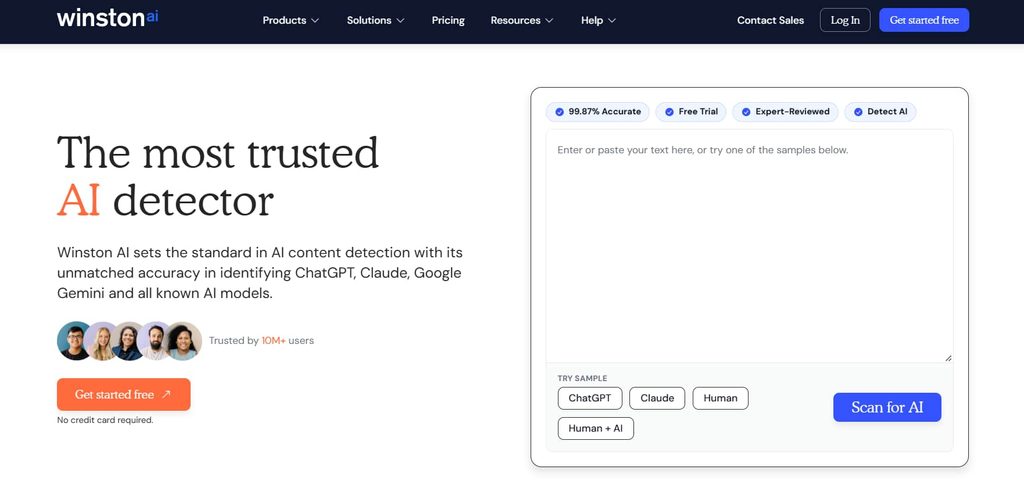
Winston AI is an AI content detection tool that analyzes text to estimate whether it was written by a human or generated by AI. It is designed for writers, students, teachers, publishers, and content teams.
You can use it to check articles, essays, reports, and other types of writing. The tool analyzes language patterns and provides a result that helps you review the content.
Winston AI also offers features such as plagiarism checking, document scanning, and AI image detection, depending on your plan.
How Does Winston AI Work?
Winston AI uses machine learning to analyze writing patterns. It looks for signals that may help distinguish human-written text from AI-generated text.
Here is how you can use it:
- Open Winston AI: Visit its website and access the AI detection tool.
- Add your content: Paste your text or upload a supported document.
- Start the scan: Let the tool analyze your writing.
- Review the results: Check the overall result and any highlighted sentences.
- Make your own judgment: Compare the result with the original document and other available evidence.
Winston AI does not simply search for a hidden label that identifies ChatGPT content. Instead, it analyzes patterns in the text and makes a prediction.
The result is an estimate, not proof of who wrote the content.
Key Features of Winston AI
Winston AI offers several features for people who need to review written or visual content.
1. AI Content Detection
The main feature is AI text detection.
You can use it to check whether an article, essay, or report contains patterns associated with AI-generated writing. The tool provides an overall result and can highlight individual sentences for closer review.
This can help you decide which parts of a document need further attention.
2. Sentence-Level Analysis
Winston AI can highlight sentences that its detector considers more likely to be AI-generated.
This is useful when you want to review a specific part of an article instead of looking only at an overall score.
However, a highlighted sentence does not automatically mean AI wrote it. Human writing can also trigger AI detectors.
3. Plagiarism Checking
Winston AI offers plagiarism detection on eligible plans.
This feature helps you check whether text may match existing sources. It addresses a different question from AI detection.
AI detection estimates how content was written. Plagiarism detection looks for matching or similar content.
A document can be original but AI-generated. It can also be human-written but contain copied material. These are separate issues.
4. Document Uploads
You can check supported document formats instead of copying and pasting every paragraph.
Available formats and upload limits depend on the plan you choose. Some plans also support scanning images or handwritten documents through text recognition.
This can make the tool useful for teachers, editors, and content teams that review multiple documents.
5. AI Image Detection
Winston AI also offers tools for analyzing images for signs of AI generation or manipulation.
This feature may help people who work with digital images and want to examine their origin.
However, an image detection result should not be treated as definitive proof that an image was created by AI.
6. Reports and Team Features
Depending on your subscription, Winston AI provides features such as shareable reports and team workspaces.
These options can help editors, agencies, and educational organizations review content and share results with other people.
Check the current plan details before paying because available features can change.
Is Winston AI Accurate?
Winston AI can be useful for identifying patterns associated with AI-generated writing. However, its accuracy depends on the text being checked, the AI model used, the amount of editing, and the testing method.
Winston AI publishes its own evaluation results and research on its website. These results provide information about its performance under specific test conditions.
However, results from a company’s own tests do not guarantee the same accuracy for every real-world document.
Several factors can affect a scan:
- Text length: Very short passages provide less information for analysis.
- Writing style: Formal, repetitive, or highly structured writing may be harder to classify.
- Editing: Human editing can change the patterns that a detector looks for.
- Language: Results may vary across languages and writing styles.
- Document type: Essays, articles, emails, and technical documents may produce different results.
For a more reliable assessment, use a longer sample when possible and review the result alongside other evidence.
Important: Do not use an AI detection score alone to accuse someone of cheating or misrepresenting their work. Winston AI can make mistakes, including flagging human-written content.
Is Winston AI Free?
Winston AI offers a limited free option or trial, depending on the version of its service and the current terms.
Its pricing pages have listed a starting allowance of 2,000 credits. Paid plans provide higher limits and additional features.
The amount you can scan, the duration of free access, and the available features may differ between plans.
Before choosing a subscription, consider these questions:
- How many words do you need to check each month?
- Do you need plagiarism detection?
- Do you need document uploads or image analysis?
- Will you use the tool alone or with a team?
- Do you need downloadable reports?
You can review the latest options on the official Winston AI pricing page.
Always check the current price and billing terms before subscribing.
Who Should Use Winston AI?
Winston AI may be useful for several types of users.
Content Writers and Bloggers
If you publish articles regularly, you can use Winston AI as one part of your content review process.
It may help you identify passages that deserve another look. You should still focus on accuracy, originality, helpful information, and your own editorial standards.
SEO Professionals
SEO professionals can use AI detection as an additional content review step.
For example, if you manage a website with many articles, you may want to review whether the content provides useful information and reflects real research.
An AI detector cannot tell you whether an article satisfies search intent, provides original insights, or deserves to rank on Google. Those questions require a broader content review.
Teachers and Educators
Teachers may use Winston AI to examine writing that raises questions about authorship.
However, an AI detection result should not be the only basis for an academic decision. Draft history, citations, writing samples, and a conversation with the student can provide important context.
Editors and Publishers
Editors can use the tool as part of a quality control process.
It may be helpful when reviewing submissions from multiple writers. Still, editors should check facts, sources, originality, and writing quality separately.
Pros and Cons of Winston AI
Before using Winston AI, consider its main advantages and limitations.
Pros
- Provides AI writing detection.
- Highlights sentences for closer review.
- Offers plagiarism checking on eligible plans.
- Supports document scanning.
- Includes additional tools for some image and team workflows.
- Can help organize content review.
Cons
- AI detection results are not always correct.
- Human-written text can be flagged as AI-generated.
- Edited AI content may be harder to classify.
- Some useful features require a paid plan.
- A detection score does not prove who wrote a document.
Overall, Winston AI is best used as a supporting tool rather than a final authority.
Winston AI vs. Traditional Plagiarism Checkers
Winston AI’s AI detection and plagiarism checking features serve different purposes from a traditional plagiarism checker used on its own.
| Feature | Winston AI | Traditional plagiarism checker |
|---|---|---|
| Main purpose | Estimate whether text resembles AI-generated writing | Identify matching or similar text |
| AI detection | Yes | Depends on the tool |
| Plagiarism checking | Available on eligible plans | Usually a core feature |
| Sentence-level AI results | Available | Depends on the tool |
| Proves who wrote the text | No | No |
Choose a tool based on the problem you want to solve. If you need to investigate possible AI-generated writing, use an AI detector. If you need to find copied material, use plagiarism detection.
If you need both, a service that offers both features may be more convenient.
How to Get Better Results From Winston AI
You can make better use of Winston AI by following a few simple practices.
Check enough text. Avoid drawing conclusions from a single sentence. A longer sample generally provides more information for the detector.
Review highlighted sentences. Look at the surrounding paragraphs instead of focusing on one score.
Keep your drafts. If you write an article yourself, save your notes, outlines, sources, and revision history. These can help demonstrate your writing process if questions arise.
Check facts separately. AI detection does not confirm whether the information in an article is correct.
Compare evidence. If the result matters, use additional evidence and human judgment instead of relying on one tool.
Respect privacy. Before uploading documents, review the service’s privacy policy and avoid submitting confidential information unless you are authorized to do so.
These practices help you use the tool more responsibly.
Frequently Asked Questions About Winston AI
What is Winston AI used for?
Winston AI is used to estimate whether written content was generated by AI. It also offers features such as plagiarism checking, document scanning, and AI image detection, depending on the plan.
Can Winston AI detect ChatGPT content?
Winston AI is designed to identify patterns associated with AI-generated text, including content produced by ChatGPT and other AI writing tools. However, it cannot guarantee that every AI-generated passage will be detected correctly.
Can Winston AI detect human-written content as AI?
Yes. Winston AI, like other AI detectors, can incorrectly classify human-written text as AI-generated. You should not treat its result as definitive proof of authorship.
Is Winston AI free?
Winston AI offers a limited free option or trial, while paid plans provide additional credits and features. Check its official pricing page for the current terms.
Does Winston AI check for plagiarism?
Yes. Winston AI offers plagiarism detection on eligible plans. Plagiarism checking and AI detection are different features, so review the available plan details before subscribing.
Is Winston AI good for SEO content?
Winston AI can be used as an additional content review tool. However, it does not determine whether an article will rank on Google. Helpful content, search intent, accuracy, original insights, and a good user experience remain important.
Should you trust a Winston AI score?
You can use the score as a signal for further review, but you should not treat it as proof. Consider the document, the writing process, and other available evidence before reaching a conclusion.
Final Verdict
Winston AI is a useful option if you want to check writing for signs of AI-generated content. Its sentence-level analysis and additional content review features can help writers, teachers, editors, and publishers.
However, no AI detector is perfect. Winston AI can produce incorrect results, and its scores should not be treated as proof of authorship.
If you decide to use it, start with the available free option, test it with your own documents, and check whether its features meet your needs before paying for a subscription.