Understanding where customers go can help businesses make better decisions.
That’s where Placer AI comes in.
Placer.ai is a location intelligence platform that helps businesses understand foot traffic, customer behavior, audience demographics, and market trends. It turns location data into insights that support retail, real estate, marketing, and investment decisions.
In this guide, you’ll learn what Placer AI is, how it works, its key features, pricing, benefits, and practical use cases.
What Is Placer AI?
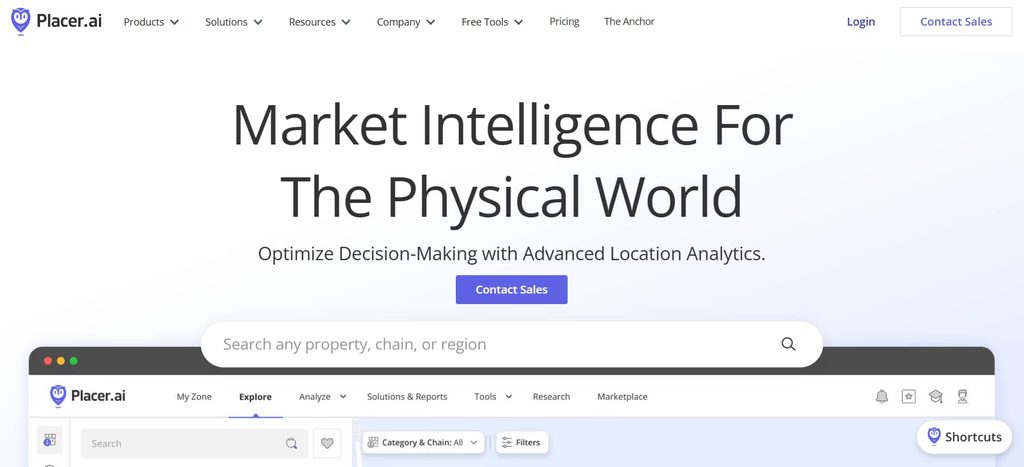
Placer AI, commonly known as Placer.ai, is a location analytics platform that helps organizations understand how people interact with physical places.
It collects anonymized mobile location data from third-party providers. It then uses data science and machine learning to estimate foot traffic and analyze visitor behavior.
Businesses can use these insights to understand:
- How many people visit a particular location.
- Where visitors come from.
- Which demographic groups visit a business.
- How long visitors stay.
- Which competing businesses attract similar customers.
- How foot traffic changes over time.
- Which locations offer better expansion opportunities.
For example, a retail company planning to open a new store can use Placer.ai to compare potential locations.
Instead of relying only on population density or nearby residential areas, the company can examine actual visitation patterns and customer demographics.
This helps decision-makers evaluate locations before investing in a new property.
Placer.ai was founded in 2018. Its platform has expanded beyond basic foot traffic measurement to cover broader market intelligence.
According to the company, its customer base includes more than 4,000 organizations across industries such as retail, commercial real estate, restaurants, and government.
How Does Placer AI Work?
Placer.ai combines mobile location data, machine learning, and statistical modeling to understand physical-world activity.
It doesn’t simply count people entering a store.
It also analyzes where visitors come from, which places they visit, and how their behavior changes over time.
Here’s how the process works.
1. Collecting Location Data
Placer.ai receives location data from third-party mobile data providers.
These providers work with mobile applications that collect location signals when users grant the necessary permissions.
The data can help identify patterns in how people move between different places.
Placer.ai does not need to know the identity of individual visitors to generate these insights.
2. Aggregating and Processing Data
The platform processes the incoming data and removes personal identifiers before using it.
It groups location signals around specific points of interest, such as shopping centers, restaurants, stores, and commercial properties.
This process helps turn individual location signals into broader visitation patterns.
3. Applying Machine Learning
Placer.ai uses machine learning and statistical modeling to estimate activity across different locations.
Its system analyzes a representative panel of mobile devices.
It then uses that information to estimate broader visitation patterns.
This matters because the platform doesn’t observe every person who visits a location.
Its results are estimates based on available data and statistical methods.
4. Generating Location Insights
After processing the data, Placer.ai presents its findings through dashboards, maps, reports, and other analytical tools.
Users can explore different locations and compare their performance.
For example, a restaurant chain can compare visitor trends across multiple branches.
A commercial real estate investor can evaluate the foot traffic around a potential acquisition.
These insights help organizations make decisions based on observed behavior rather than assumptions.
Key Features of Placer AI
Placer.ai offers several features designed to help organizations understand physical locations and consumer activity.
Here are some of its most important capabilities.
1. Foot Traffic Analytics
Foot traffic analytics is one of Placer.ai’s core features.
It helps businesses understand how many people visit a particular location and how visitation changes over time.
Users can examine traffic patterns across different periods.
For example, a retail manager might compare store visits during weekdays and weekends.
They can also examine seasonal changes, holiday traffic, and the impact of promotional campaigns.
This information can help businesses make better operational decisions.
Some practical applications include:
- Measuring store performance.
- Identifying busy and quiet periods.
- Evaluating promotional campaigns.
- Understanding seasonal demand.
- Comparing visitor trends across locations.
Foot traffic data can also help businesses identify declining visitation before it becomes a larger operational problem.
2. Trade Area Analysis
A trade area is the geographic region from which a business attracts its customers.
Understanding this area is important when selecting a new business location.
Placer.ai offers a feature called True Trade Area.
It uses visitation patterns to estimate where a location’s visitors actually come from.
This is different from simply drawing a five-mile or ten-mile circle around a property.
Consider a shopping center located near two different residential areas.
One area might be geographically close but contribute relatively few visitors.
Another might be farther away but generate a significant share of the center’s traffic.
Traditional distance-based analysis may miss this difference.
Trade area analysis helps businesses understand the actual reach of a location.
3. Audience Demographics
Knowing how many people visit a business is useful.
Knowing who those visitors are can be even more valuable.
Placer.ai provides audience insights that help organizations understand the characteristics of visitors.
Depending on the available datasets, these insights can include:
- Age distribution.
- Household income.
- Population characteristics.
- Lifestyle segments.
- Consumer interests.
- Behavioral patterns.
For example, a premium clothing retailer may want to understand whether a potential location attracts visitors from its target audience.
Audience analysis can help evaluate that opportunity.
However, these insights represent aggregated estimates. They don’t identify individual customers.
4. Competitive Benchmarking
Businesses rarely operate without competition.
Understanding how competitors perform can reveal important market opportunities.
Placer.ai allows users to compare visitation patterns across businesses, locations, and industries.
For example, a restaurant chain can compare its branches with nearby competitors.
It can examine which locations attract more visitors and how their traffic changes over time.
This information can help businesses investigate:
- Competitor performance.
- Market demand.
- Geographic opportunities.
- Audience overlap.
- Changes in local competition.
Competitive benchmarking is particularly useful for businesses with multiple physical locations.
5. Customer Journey Analysis
Customers rarely visit only one location during a shopping trip.
They may visit a grocery store, stop at a coffee shop, and then go to a shopping mall.
Placer.ai helps organizations understand these movement patterns through visitor journey and cross-shopping insights.
Businesses can examine which other places their visitors tend to visit.
For example, a shopping center may discover that its visitors frequently visit a particular grocery chain.
That insight could help the property management team identify suitable retail tenants.
Customer journey analysis can also support partnership opportunities and marketing strategies.
6. Market and Location Comparisons
Choosing between two locations can be difficult.
Both may have attractive demographics and good road access.
But their actual customer activity could be very different.
Placer.ai helps users compare markets, properties, and individual locations.
They can examine visitation trends, audience characteristics, and competitive conditions.
This is useful for:
- Retail expansion.
- Restaurant site selection.
- Commercial property investment.
- Franchise development.
- Market research.
The goal is to identify opportunities supported by real-world activity.
7. Reporting and Data Integration
Placer.ai provides multiple ways to access and use its data.
Users can work directly through its analytics platform.
Businesses with more advanced requirements can also explore its API and data feed options.
These integrations allow organizations to incorporate location intelligence into their existing reporting systems and applications.
For example, a company could combine foot traffic estimates with internal sales data to investigate relationships between store visits and revenue.
This can make location analytics more useful across different departments.
Who Uses Placer AI?
Placer.ai is designed for organizations that make decisions involving physical locations.
Its capabilities can support several industries.
Let’s explore some common use cases.
1. Retail Businesses
Retailers need to understand where their customers shop and which locations attract the right audience.
Placer.ai helps them analyze store traffic, customer demographics, and competitor performance.
For example, a clothing retailer planning to open five new branches can compare potential locations before signing leases.
The company can examine visitor volume, trade areas, and audience characteristics.
It can then prioritize locations that appear to offer better opportunities.
Retail businesses can also use these insights to evaluate existing stores.
2. Commercial Real Estate
Commercial real estate professionals make decisions involving large financial commitments.
A property’s location, visitor activity, and surrounding businesses can influence its investment potential.
Placer.ai helps property owners, brokers, developers, and investors understand these factors.
They can use the platform to:
- Evaluate shopping centers.
- Analyze commercial properties.
- Understand tenant performance.
- Compare competing properties.
- Identify expansion opportunities.
- Support leasing discussions.
For example, a shopping mall owner can use visitation data to demonstrate the property’s audience reach to a potential tenant.
This provides additional evidence during leasing negotiations.
3. Restaurants and Food Chains
Restaurant owners need to understand local demand and customer behavior.
Placer.ai can help restaurant operators compare locations and identify areas with promising customer activity.
For example, a fast-food chain might compare two potential locations.
One could have higher overall foot traffic, while the other attracts visitors who better match its target audience.
The company can use these insights alongside rent, competition, operating costs, and other business factors.
4. Marketing and Advertising Agencies
Marketing agencies can use location intelligence to understand physical-world consumer behavior.
For example, an agency running a campaign for a shopping center may want to measure changes in visitation during the campaign period.
Placer.ai can help compare traffic patterns before and after marketing activities.
Agencies can also use audience insights to evaluate potential campaign locations.
However, changes in foot traffic don’t automatically prove that a specific campaign caused the change.
Other factors, such as weather, holidays, and local events, can influence visitation.
5. Government and Economic Development Organizations
Local governments need information about how people interact with cities, commercial districts, and public spaces.
Placer.ai can help public organizations analyze visitation trends and local economic activity.
For example, an economic development team might use location insights to understand whether a downtown business district is attracting visitors.
It can also investigate where residents travel for shopping and dining.
These findings can support business recruitment, infrastructure planning, and local development strategies.
6. Financial Institutions and Investors
Investors often need additional information when evaluating commercial properties and businesses.
Location intelligence can provide another perspective on market activity.
For example, an investor analyzing a retail property might examine its visitor trends and compare them with similar properties.
This information can complement traditional financial analysis.
It shouldn’t replace revenue statements, financial forecasts, property inspections, or other due diligence.
How to Use Placer AI
Getting started with Placer.ai is relatively straightforward.
The platform is designed to help users explore locations and generate reports without building their own location analytics systems.
Here are the basic steps.
Step 1: Visit the Official Website
Open your browser and visit:
You can explore the platform and learn about its available features.
Step 2: Create an Account
Placer.ai offers a freemium version for users who want to explore its platform.
You can register through the official website.
Keep in mind that the free version has limited functionality compared with the paid platform.
Step 3: Search for a Location
Once you have access, search for a business, shopping center, or other supported location.
You can explore available information about that property.
Step 4: Analyze Foot Traffic
Review the available visitation information.
Depending on the location and your account access, you may be able to examine:
- Visitor trends.
- Historical visitation.
- Day-of-week patterns.
- Audience demographics.
- Trade areas.
These metrics can help you understand how people interact with the location.
Step 5: Compare Locations
Compare multiple businesses or properties to identify differences in visitor activity and audience characteristics.
For example, you might compare two shopping centers in the same market.
Look beyond total visits.
Consider audience fit, trade area, competition, and seasonal patterns.
Step 6: Create and Share Reports
You can use the platform’s reporting features to organize findings and share insights with relevant stakeholders.
Businesses can use these reports to support expansion plans, investment discussions, and operational decisions.
Is Placer AI Free?
Yes. Placer.ai offers a free version of its platform.
However, the free edition provides limited access to its data and features.
It is mainly designed to give users an introduction to the platform.
The paid version offers broader functionality and access to more comprehensive location intelligence.
According to Placer.ai’s official pricing information, subscription packages are customized according to customer requirements.
The company does not publish a single standard subscription price for its full platform.
You need to contact its sales team to receive a personalized quote.
Here is a basic comparison:
| Feature | Free version | Paid version |
|---|---|---|
| Platform access | Limited | Broader access |
| Property coverage | Selected locations | Expanded coverage |
| Historical insights | Limited | More comprehensive |
| Advanced analytics | Limited | Available based on package |
| Custom reporting | Limited | More extensive |
| API and data feeds | Not generally included | Available options |
For the latest information, visit Placer.ai Pricing.
How Much Does Placer AI Cost?
Placer.ai uses customized subscription pricing.
The final cost depends on the organization’s requirements and the type of data access it needs.
Factors that may influence the subscription include:
- Number of users.
- Data requirements.
- Analytics features.
- API access.
- Data feed requirements.
- Business use cases.
Organizations looking for advanced location intelligence should contact Placer.ai directly.
The free version is a practical starting point for exploring the platform.
Is Placer AI Accurate?
Accuracy is one of the most important considerations when using location analytics.
Placer.ai estimates foot traffic using a representative panel of mobile devices and statistical modeling.
It doesn’t directly count every person entering every store.
Instead, it analyzes available location signals and uses machine learning to estimate broader visitation patterns.
According to its official methodology, the company validates its estimates against first-party and authoritative data sources.
Placer.ai reports correlations exceeding 90% in its validation work.
However, this doesn’t mean every location estimate is guaranteed to be 90% accurate.
Actual accuracy can vary depending on the location, sample size, data availability, and measurement period.
It’s best to treat Placer.ai data as an analytical estimate rather than an exact visitor count.
For important business decisions, compare its findings with other sources.
These might include:
- Internal sales records.
- Store entrance counters.
- Customer loyalty data.
- Local demographic statistics.
- Property management reports.
Combining multiple data sources can provide a more complete picture.
Is Placer AI Safe? Understanding Its Privacy Practices
Location data can raise legitimate privacy concerns.
After all, mobile devices can generate information about where people travel and which places they visit.
Placer.ai states that its platform is designed around privacy protection.
According to its official Trust Center, the company receives location data from third-party providers after personal identifiers have been removed.
It then aggregates the information around physical locations.
The company also uses a privacy threshold based on K-anonymity of 50.
In simple terms, the platform is designed to prevent displayed information from being traced to a specific device or individual.
Placer.ai also states that it does not sell user-level location data.
Its customers receive aggregated statistical insights about locations rather than personally identifiable visitor information.
Some of its privacy protections include:
- Removal of personal identifiers before data reaches Placer.ai.
- Aggregation of location information.
- Minimum device thresholds for reporting.
- Obfuscation of displayed map locations.
- Restrictions on reporting for certain sensitive locations.
- Encryption and access controls.
You can read more about these practices in the Placer.ai Trust Center.
It’s still important to distinguish between anonymized data and the absence of privacy risks altogether.
Organizations should review the platform’s privacy documentation and applicable data protection requirements before using location intelligence.
Benefits of Using Placer AI
Placer.ai offers several advantages for businesses that depend on physical locations.
Here are some of the most important ones.
1. Better Business Decisions
Business decisions based on assumptions can be expensive.
Location intelligence provides additional evidence about how people interact with physical places.
This can help organizations evaluate opportunities more carefully.
2. Reduced Site Selection Risk
Opening a new store or restaurant requires significant investment.
Placer.ai helps businesses compare potential locations before committing to a property.
This can reduce reliance on basic distance and population estimates.
3. Improved Customer Understanding
Audience insights help businesses understand the characteristics of people visiting their locations.
This can support more relevant marketing and business strategies.
4. Stronger Competitive Analysis
Businesses can compare their locations with competitors.
They can identify differences in visitor trends, market reach, and audience overlap.
5. More Efficient Market Research
Traditional market research can involve multiple data sources and considerable manual work.
Placer.ai brings several location intelligence insights into one platform.
This can make market analysis more efficient.
6. Better Expansion Planning
Businesses can use location insights to identify markets that may offer stronger growth opportunities.
They can compare existing locations, nearby competition, and potential customer bases.
This helps create a more structured expansion strategy.
Limitations of Placer AI
Although Placer.ai offers useful insights, it isn’t suitable for every business or research requirement.
Understanding its limitations is important.
1. Data Is Estimated
Placer.ai doesn’t count every visitor directly.
Its results are based on representative mobile data panels and statistical models.
Therefore, estimates may differ from actual visitor counts.
2. Limited Geographic Coverage
Placer.ai’s core location intelligence coverage focuses on commercial locations in the United States.
Businesses operating in other countries should verify geographic coverage before considering a subscription.
Don’t assume that every international market has the same level of data availability.
3. Paid Features Can Be Expensive
The platform uses customized subscription packages.
Organizations with limited budgets may find the full platform difficult to justify.
The free version also has significant limitations.
4. Not Every Business Needs It
Placer.ai is most useful for organizations that make decisions involving physical locations.
An online-only business with no physical retail operations may not benefit from its core features.
5. Data Requires Context
Foot traffic alone doesn’t explain business performance.
A store with more visitors doesn’t necessarily generate more revenue.
Conversion rates, average order values, operating costs, and customer retention also matter.
Businesses should combine location intelligence with other relevant metrics.
Placer AI Alternatives
Placer.ai isn’t the only platform offering location intelligence and foot traffic analytics.
Several other tools provide related capabilities.
Here are some alternatives worth exploring.
1. SafeGraph
SafeGraph provides location-based datasets and points-of-interest information.
Its data can support market research, site selection, and location analytics.
Businesses and developers can use its datasets to study commercial locations and geographic trends.
2. Foursquare
Foursquare provides location technology, place data, and location intelligence solutions.
Its offerings can support businesses that need to understand physical-world movement and location-based behavior.
3. Near
Near provides location intelligence and audience insights for businesses.
Its solutions can support customer analysis, market research, and location-based marketing.
4. Unacast
Unacast provides location data and geospatial analytics solutions.
Its technology can support mobility analysis, market research, and commercial location decisions.
5. Google Maps Platform
Google Maps Platform offers mapping, places, routes, and geospatial capabilities through APIs.
Developers can use it to build location-based applications and services.
However, it isn’t a direct replacement for Placer.ai’s aggregated foot traffic analytics.
Which Placer AI Alternative Should You Choose?
The right platform depends on your requirements.
If you need location intelligence and foot traffic analysis, compare the available datasets, geographic coverage, methodology, and reporting capabilities.
If you’re building a location-based application, a mapping platform such as Google Maps Platform may be more appropriate.
Before choosing an alternative, consider the data you actually need rather than comparing tools based only on their feature lists.
Frequently Asked Questions About Placer AI
Here are answers to some common questions about Placer AI and its location analytics platform.
1. What is Placer AI used for?
Placer AI is used for location intelligence and foot traffic analytics.
Businesses use it to understand visitor behavior, customer demographics, trade areas, competitor performance, and market trends.
2. Is Placer AI the same as Placer.ai?
Yes. Placer AI and Placer.ai refer to the same company and platform.
Placer.ai is the official brand name.
3. Who owns Placer.ai?
Placer.ai is a privately held technology company.
It was founded by Noam Ben-Zvi, Zohar Bar-Yehuda, Oded Fossfeld, and Ofir Lemel.
4. When was Placer.ai founded?
Placer.ai was founded in 2018.
The company developed a location intelligence platform to help organizations understand physical-world activity and consumer behavior.
5. Is Placer.ai free?
Placer.ai offers a free version with limited features and property coverage.
Its full platform uses customized paid subscription packages.
6. How does Placer.ai collect data?
Placer.ai receives anonymized location data from third-party mobile data providers.
It processes and aggregates the information to estimate foot traffic and understand visitation patterns.
7. Does Placer.ai track individual people?
Placer.ai states that it provides aggregated statistical information rather than identifiable individual location data.
Its privacy practices include removing personal identifiers, applying aggregation thresholds, and obfuscating map locations.
8. Can Placer.ai measure foot traffic?
Yes. Foot traffic analytics is one of its main capabilities.
The platform estimates visitation patterns for stores, shopping centers, commercial properties, and other locations.
9. Who uses Placer.ai?
Its users include retailers, commercial real estate professionals, restaurant operators, investors, advertising agencies, and government organizations.
10. Is Placer.ai accurate?
Placer.ai uses mobile data panels, machine learning, and statistical modeling to estimate visitation.
Its accuracy can vary depending on the location and available data.
Its estimates should be treated as analytical measurements rather than exact visitor counts.
11. Does Placer.ai work outside the United States?
Placer.ai’s core commercial location intelligence platform focuses on the United States.
Businesses interested in international coverage should contact the company to confirm availability for their specific markets.
12. What is a True Trade Area in Placer.ai?
A True Trade Area is an estimate of the geographic areas from which visitors to a particular location originate.
It helps businesses understand their actual customer reach rather than relying only on distance-based estimates.
13. Can Placer.ai help businesses find new store locations?
Yes. Businesses can compare potential locations using visitation, trade area, audience, and competitor insights.
This can support site selection and expansion planning.
14. Does Placer.ai offer an API?
Yes. Placer.ai offers an API that allows organizations to access supported location intelligence data programmatically.
This can help businesses integrate location insights into internal dashboards, applications, and reporting systems.
15. Is Placer.ai worth using?
Placer.ai can be valuable for organizations that depend on physical locations and need reliable market intelligence.
Retailers, real estate companies, and restaurant chains may find its insights particularly useful.
However, its value depends on data requirements, geographic coverage, subscription costs, and how the organization uses the information.
Final Thoughts
Placer.ai helps businesses understand the physical world through location intelligence.
Its foot traffic analytics, audience insights, trade area analysis, and competitive benchmarking capabilities can support better business decisions.
It’s particularly useful for retailers, real estate professionals, restaurant chains, and organizations that depend on physical locations.
However, its data is based on statistical estimates, not direct counts of every visitor.
The best results come from combining location intelligence with other business data.
For organizations making important location-based decisions, Placer.ai offers a useful way to turn real-world movement patterns into actionable insights.